book2 min read
Ego Is the Enemy - Ryan Holiday
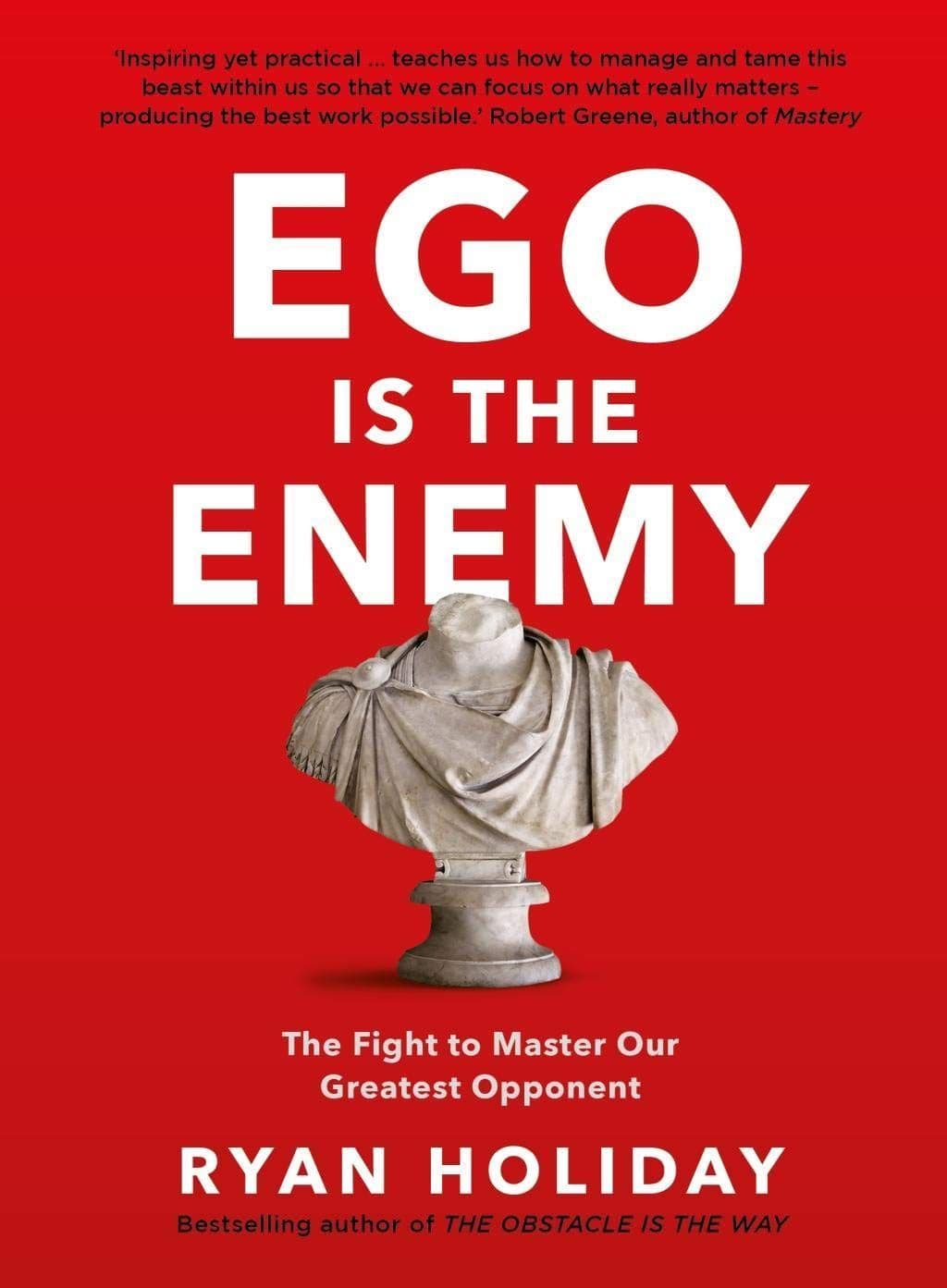
In a world that often applauds overconfidence and self-promotion, Ryan Holiday's Ego Is the Enemy is a clear reminder of the dangers of an inflated sense of self. Drawing on philosophy, history and psychology, the book treats ego not as a Freudian concept but as an "unhealthy belief in our own importance". It follows ego through three stages: aspiring, success and failure.
In the prologue, Holiday writes that "the orator Demosthenes once said that virtue begins with understanding and is fulfilled by courage." That sets the tone for a discussion in which Holiday warns us against fooling ourselves; as Richard Feynman put it, "you are the easiest person to fool". The book keeps coming back to the point that "the ego we see most commonly is an unhealthy belief in our own importance."
It gives an almost relentless catalogue of the ways ego distorts our view: confusing arrogance with self-confidence, or recklessness with self-assurance. Holiday makes it clear that ego gets between us and the world as it really is.
One observation that stayed with me is that "our cultural values almost try to make us dependent on validation, entitled, and ruled by our emotions." That feels even more relevant now, given how much of life is measured in likes, shares and other forms of outside approval.
The book doesn't only name the problem; it offers ways out. It points towards a Stoic acceptance of life, and urges us to stay students, to focus on real progress rather than visualising it, and to take responsibility for our actions. It reminds us that "appearances are deceiving" and that "an education can't be 'hacked'; there are no shortcuts besides hacking it every single day."
What makes the book worth reading is the range of examples, from history to the present day, of people whose rise and fall turned on ego, and of people who kept theirs in check. It's a sobering reminder that "no one is permanently successful, and not everyone finds success on the first attempt". One of the positive examples is Genghis Khan, whose success Holiday, quoting the historian Jack Weatherford, puts down to a "persistent cycle of pragmatic learning, experimental adaptation, and constant revision driven by his uniquely disciplined and focused will."
Ego Is the Enemy is a guide for anyone who wants to avoid the traps of ego and live a humbler, more connected and more honest life. Holiday concludes: "We don't need pity - our own or anyone else's - we need purpose, poise, and patience."
In a culture that often confuses self-promotion with self-worth, this book helps with the balance between confidence and arrogance, ambition and recklessness, success and hubris. I'd recommend it to anyone who wants not just to achieve things, but to gain some wisdom and virtue along the way.