book2 min read
Think Big - Dr Grace Lordan
This note now includes my post "The outcome is optional" (January 2024).
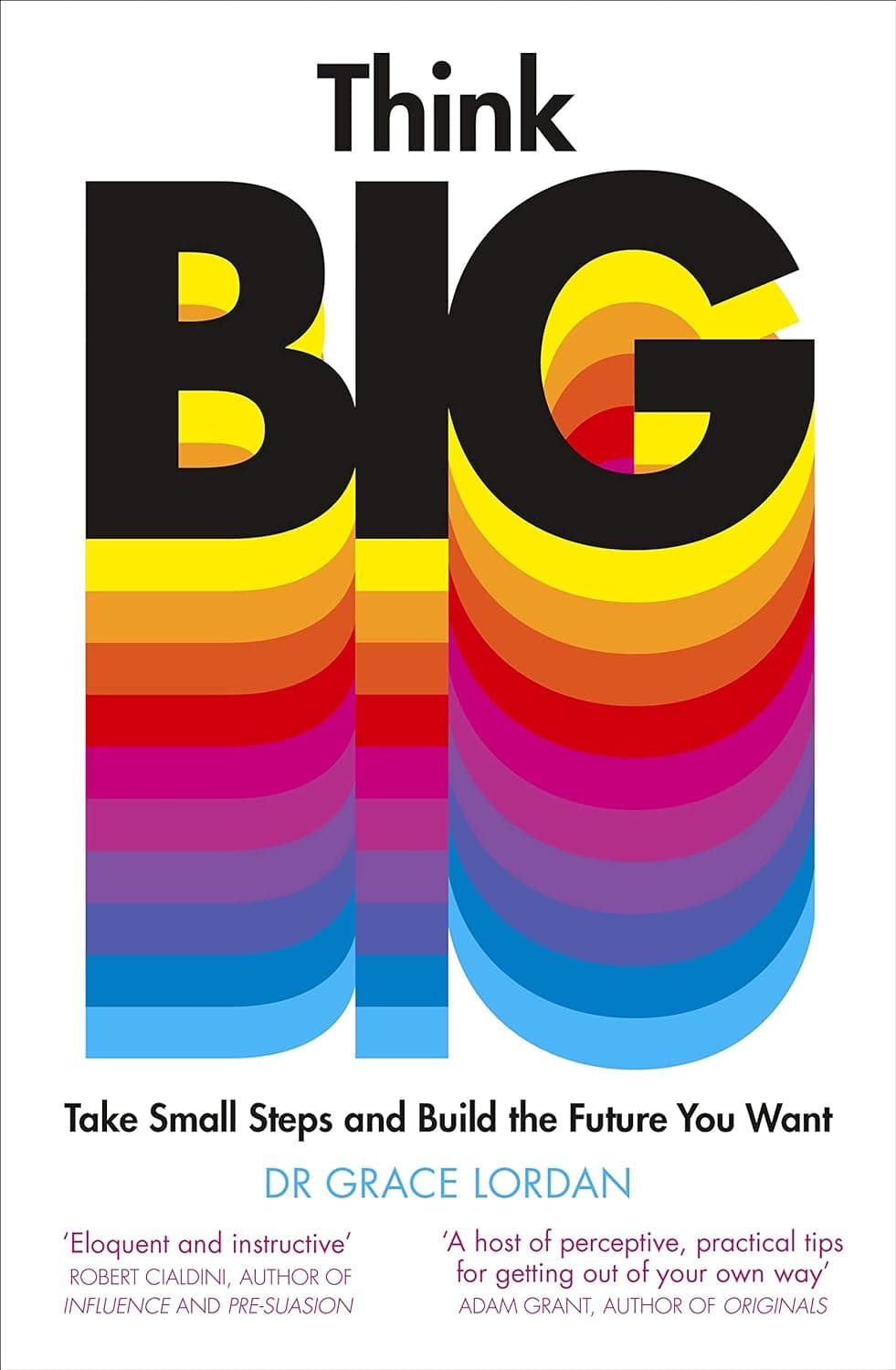
Think Big: Take Small Steps and Build the Future You Want by Dr Grace Lordan is about human behaviour and personal growth, and it draws on behavioural science throughout.
Its most practical idea is how to reach big goals: through small, manageable steps. That fits what we know about habits and behaviour change, where small, steady progress usually lasts longer than big leaps.
Lordan also writes about building inner resilience alongside outward skills. That reminded me of Stoic teaching, which puts inner virtue and strength next to practical ability. The book encourages a mindset that welcomes challenges and change, and it makes the point that our hardest battles are often internal.
Another theme is knowing what we can control and what we have to accept. For me this echoed Stoicism again, especially Epictetus, who taught that peace comes from separating external events from our reactions to them. The practical upshot is the same: focus on how you see and respond to things, rather than trying to control what you can't.
The book also looks at the biases that get in the way when we deal with other people, and argues for self-awareness so that we can notice and manage our own.
The outcome is optional
The idea from the book I come back to most is that any outcome is a product of effort and luck. (That's my shorthand; Lordan's point is that outcomes come from what we put in and the luck we have along the way.) It's simple and important to remember, and it has made my life a lot simpler.
Why does it matter so much to me?
First, it's about the circle of control. We can't control anything outside it, and there's no point being stressed about things we can't change.
Second, luck is a strange thing. Some of it comes from effort, depending on where you put that effort, and some comes through conversations and relationships with other people. But luck is unstable and random: the same actions don't always give the same result. So I try not to spend resources chasing luck, or to build plans that depend on it, simply because I can't control it.
Third, effort is entirely up to me, as with any process. That's what I focus on, and what I work to improve.
For me, all of this adds up to a less stressful life. I don't know what the outcome will be. I do know that I can do my best and feel good about it.
Think Big is less a manual for success than a guide to a more balanced life. Its mix of behavioural science and practical steps makes it useful for anyone who wants to grow, personally and professionally.